PRESS RELEASE
WDC-54-2026
23 September 2026
Embassy Press and Information Section
info@phembassy-us.org
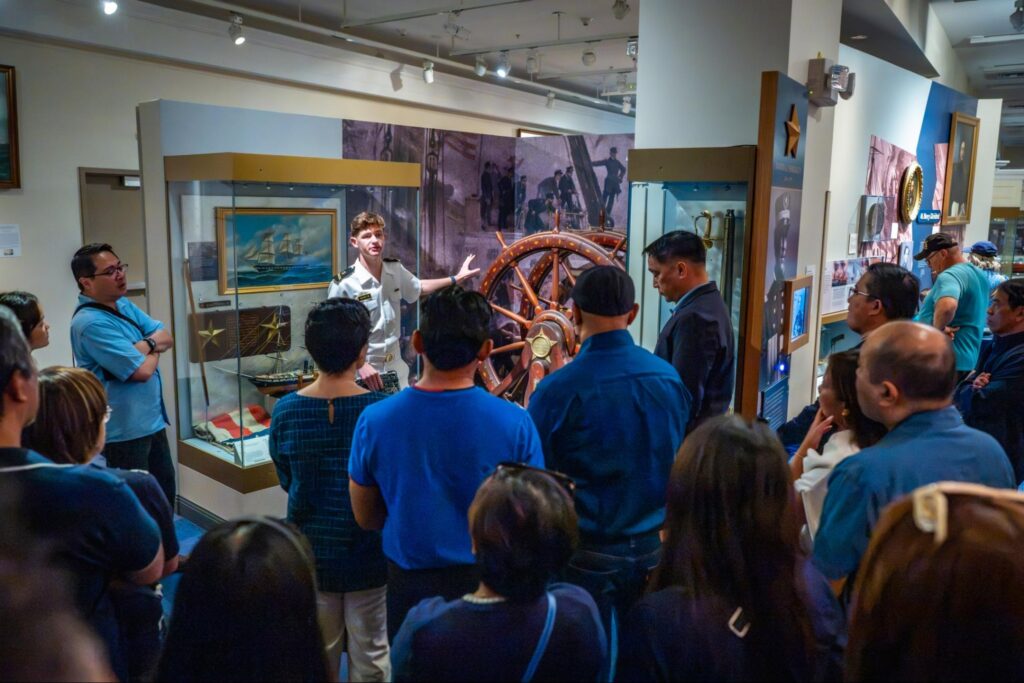
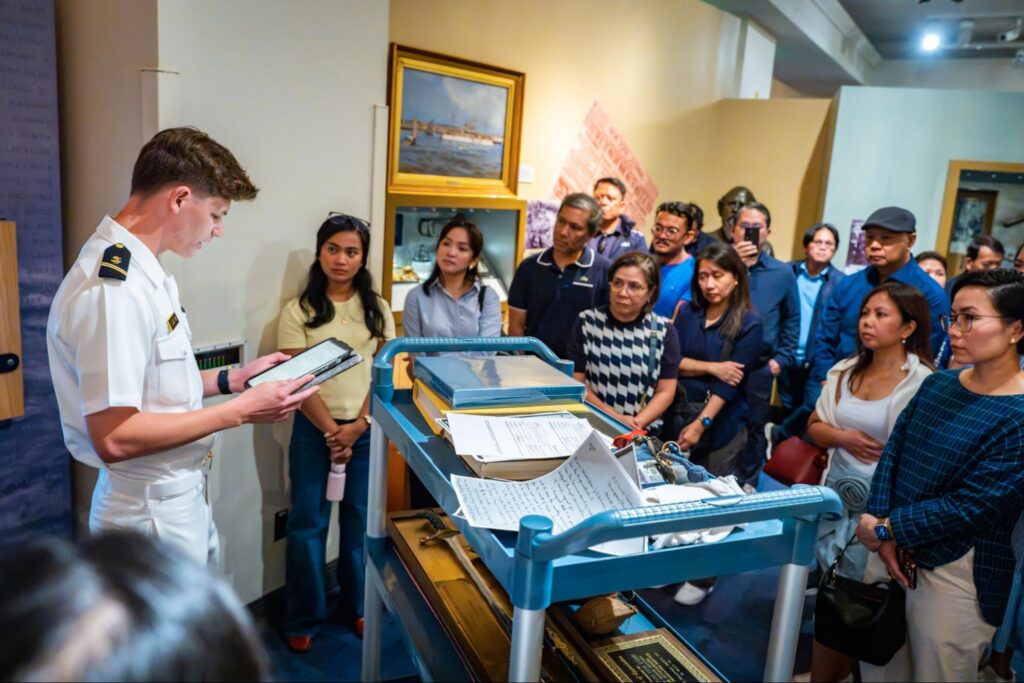
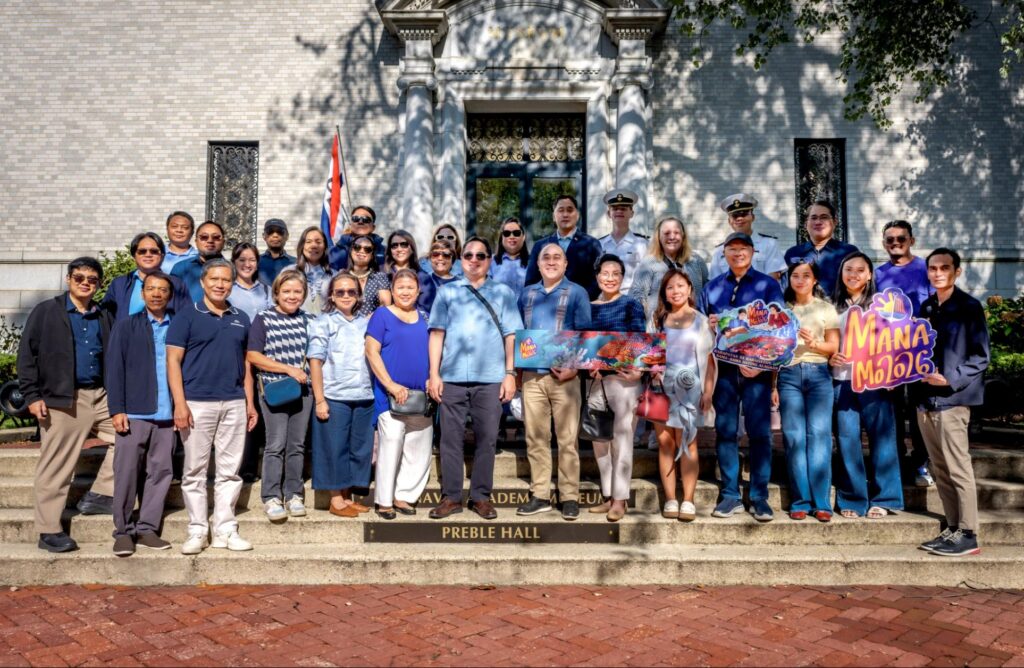
WASHINGTON, D.C. – As part of its commemoration of Maritime and Archipelagic Nation Awareness Month (MANAMo), the Philippine Embassy organized a special tour of the United States Naval Academy (USNA) Museum in Annapolis, Maryland, where Embassy personnel gained a greater appreciation for shared Philippines-U.S. connections in naval history.
The tour, conducted by SSG Sondra Duplantis (USA, Ret.), Education Specialist of the Museum, highlighted the long tradition of recruitment of Filipinos for service in the U.S. Navy, one of the first records of which was during the American Civil War, in the Battle of Mobile Bay on 5 August 1864. The battle has been immortalized by Rear Admiral David G. Farragut’s famous order to capture the crucial port, paraphrased “Damn the torpedoes! Full speed ahead!”, signifying bravery in the midst of uncertainty.
The tradition continued through 1901, when U.S. President William McKinley issued an executive order enlisting Filipinos and Guamanians to the Insular Force of the U.S. Navy. Among them was Navy Petty Officer 2nd Class Telesforo Trinidad, who bravely rescued shipmates after a boiler explosion aboard the USS San Diego in 1915. For his heroism, Trinidad became the first and only Filipino recipient of the Medal of Honor, and will lend his name to a future Navy vessel, the USS Telesforo Trinidad.
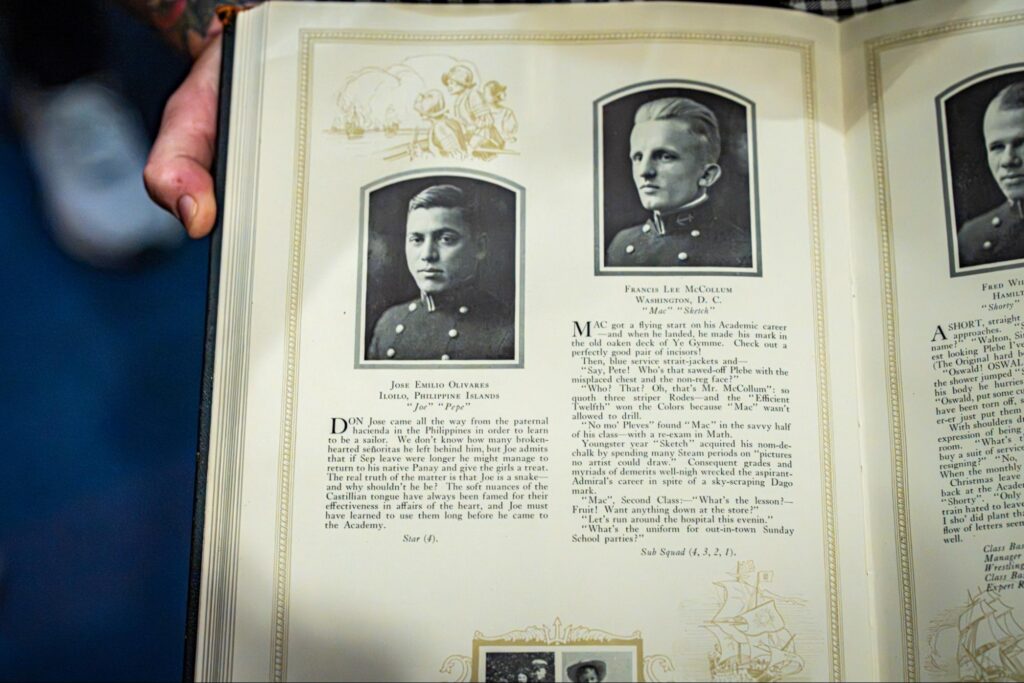
Other noteworthy trailblazers in Philippines-U.S. naval history who were highlighted during the tour were: aviation officer Julio Ereneta, a veteran of two World Wars who served aboard, among others, the USS Rizal, a vessel donated by the Insular Government of the Philippines named after Philippine national hero Dr. Jose Rizal; Col. Jose Emilio Olivares, the first Filipino graduate of the USNA in 1923; and Capt. Jose Ricardo “Dick” Corpus, the first Filipino-American to command a U.S. Navy submarine.
Following independence in 1946, the Philippines entered into an agreement with the U.S. for the annual recruitment of Filipinos into the U.S. Navy. Doors were opened further for Filipinos after a series of executive orders in 1970 addressed discrimination in the service, making Filipinos eligible for any enlisted rating by virtue of education, prior experience, and security qualifications. These advancements enabled Filipinos to comprise the largest percentage of foreign-born recruits in the U.S. Navy for decades, and many Filipino-Americans have since continued this tradition of enlistment.
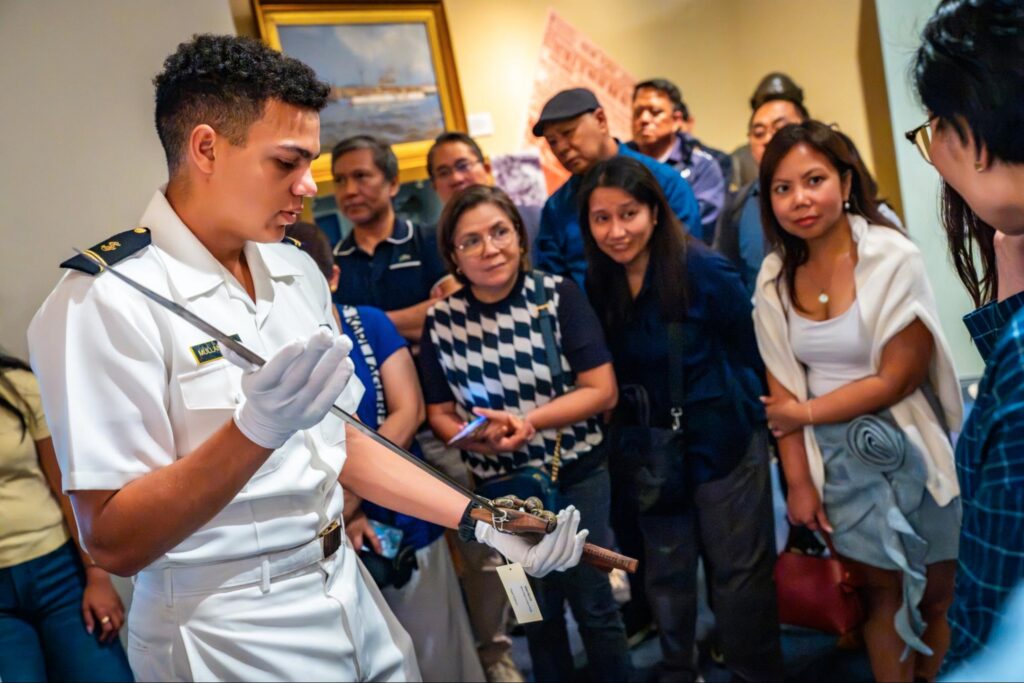
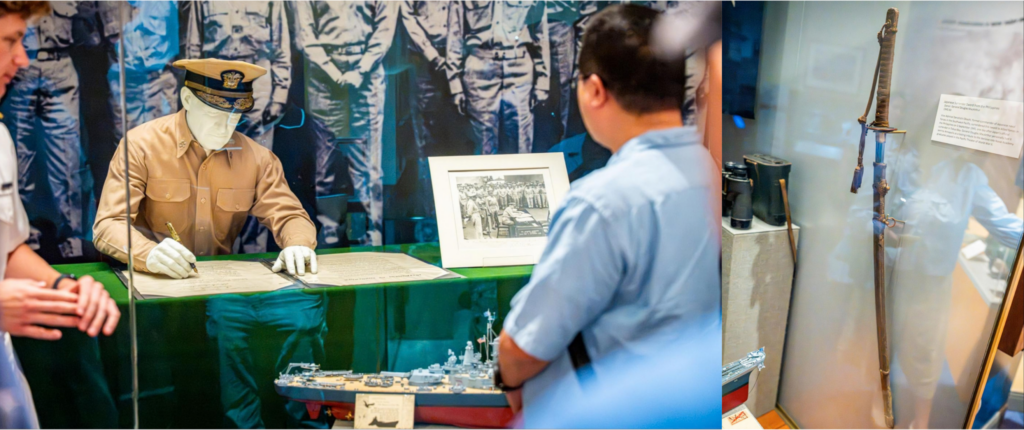
During the tour, the Museum also showcased Philippine gifts and artifacts that were gifted or donated to the USNA over the years, including traditional weapons, basketry, and costumes. SSG Sondra Duplantis was assisted in the tour by MIDN 2/C Austin Wilson and MIDN 2/C Ian Mullaney, as well as two Filipinos currently enrolled as international students at the USNA, MIDN 1/C Sharmaine Sumampong and MIDN 2/C Rouzhen Alaponta.
The U.S. Naval Academy is the undergraduate college of U.S. naval service which trains aspiring professional officers of the U.S. Navy and Marine Corps. The USNA Museum is a two-floor facility in the Academy grounds offering exhibits on the history and development of the U.S. Navy.
The tour is an activity of the Embassy under MANAMo, whose theme for 2026 “Karapatan sa Karagatan, Sama-Sama Nating Alagaan” emphasizes Filipinos’ shared stewardship of its rich maritime heritage.
###