PRESS RELEASE
WDC-27-2026
05 May 2026
Embassy Press and Information Section
info@phembassy-us.org
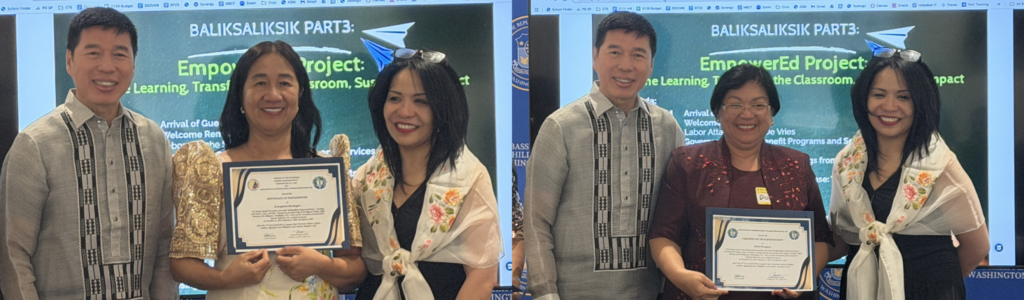
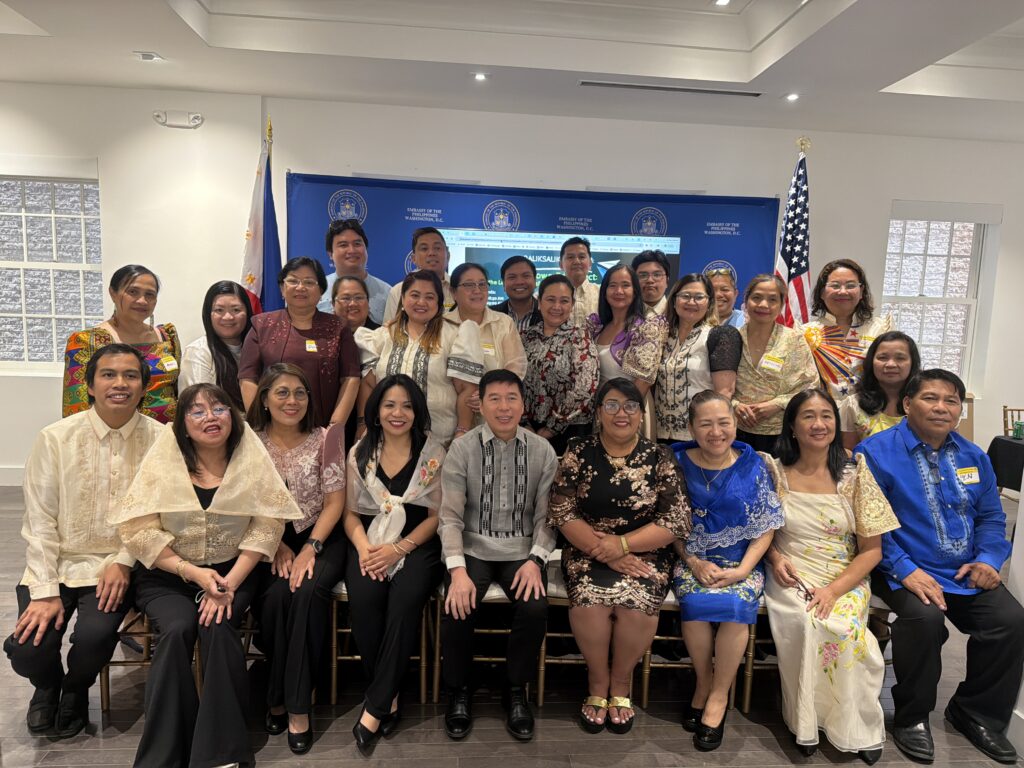
WASHINGTON, D.C. – The Philippine Embassy in Washington, D.C., through its Migrant Workers Office (MWO), held the third and final installment of its capability-building training series for Filipino educators in the Washington, D.C., Maryland, and Virginia (DMV) area on 25 April 2026 at the Embassy of the Philippines Chancery Annex. Twenty-one (21) teachers participated in the session, “Baliksaliksik Part 3: Lead the Learning. Transform the Classroom. Sustain the Impact.”
Labor Attaché Saul T. De Vries opened the program and underscored the value of continually strengthening teaching strategies and sharpening instructional skills. He also noted that Filipino educators bring more than the curriculum to their students—sharing the vibrancy of Filipino culture, as well as the warmth and hospitality for which Filipinos are known.
Participants were also briefed on the programs and services of the Pag-IBIG Fund and the Social Security System by Atty. Eduardo Labo, Jr. and Mr. Rigor Pantollano, respectively. Foreign Liaison Officer Sean Ramos likewise led a safety awareness session, offering practical guidance on responding to everyday emergencies, including situations that may arise in classroom settings.
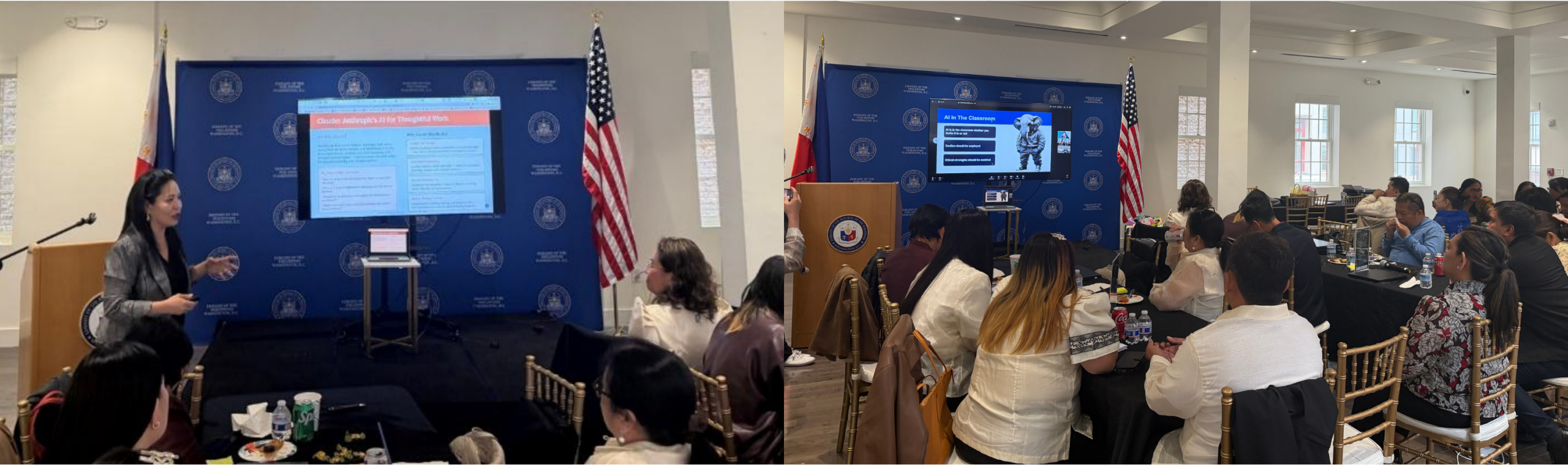
Dr. Ingrid Jomento-Cruz facilitated a recap of key learnings from the first two sessions and guided participants in reflecting on successful classroom applications, identifying challenges, and setting goals for continued instructional improvement. She also revisited and demonstrated artificial intelligence (AI) tools that can support modern teaching practices.
The training concluded with a keynote by Dr. Sandra Rose, Innovation Officer of the Prince George’s County Public Schools (PGCPS), titled “Redefining Academic Integrity: Bridging the Digital Divide.” Dr. Rose advocated for AI literacy that equips students to become critical and ethical co-creators. She emphasized that integrating AI in education can help narrow achievement gaps, particularly among marginalized learners.
The first and second sessions of the Baliksaliksik series were held in November 2025 and February 2026, respectively. The three-part initiative aimed to strengthen the instructional capacity of Filipino educators and help them respond to the evolving demands of the teaching profession.